
US EV Tax Credits: China Battery Component Rules
or complex compliance issues.
clearance and fund security.
The United States has recently introduced new regulations on Chinese automotive batteries,which is a major move in international trade and the electric vehicle industry.According to reports from Bloomberg and the Associated Press,the US Treasury Department announced that from next year,US - produced electric vehicles containing battery components manufactured or assembled in countries such as China will no longer be eligible for a tax credit of up to $7,500.This measure is part of the US Inflation Reduction Act (IRA),aiming to promote the development of the domestic electric vehicle industry.
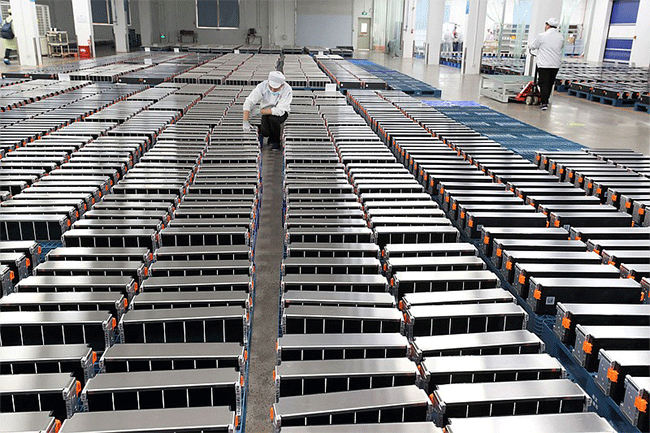
This new regulation represents a major blow to China’s role in the U.S.electric vehicle supply chain.Despite criticism that excluding China from the supply chain is unrealistic given its dominant position,this move still represents a step by the U.S.government to reduce its dependence on China’s electric vehicle industry.The new regulation requires that,starting from 2024,U.S.clean vehicles eligible for tax credits must not contain battery components manufactured or assembled by "Foreign Entities of Concern" (FEOC),and starting from 2025,these vehicles must also not contain critical minerals such as nickel and lithium extracted,processed,or recycled by these entities.
This regulation is not only aimed at China but also includes companies from countries such as Russia,North Korea,and Iran.If a company is registered in these countries or its state - owned part reaches the 25% threshold,it will be regarded as an FEOC.This means that many Chinese companies that dominate the global electric vehicle industry may be restricted.
John Podesta,the White Houses chief clean - energy advisor to President Joe Biden,said that this new regulation will ensure that the future of US electric vehicles is mainly made in the US,which will encourage US automakers,battery manufacturers,and critical - mineral producers to invest in a diversified and resilient supply chain.
However,the US electric vehicle industry still heavily depends on Chinese critical minerals and components.John Bozzella,the president and CEO of the Alliance for Automotive Innovation,bluntly said that the transformation of the US electric vehicle industry takes time and cannot be achieved overnight.In addition,Eli Hinckley,a partner at the international energy law firm Baker Botts,also mentioned that completely excluding China - related components is not only more challenging logically but may also lead to an increase in product prices.
After the US Congress passed the IRA last year,there was a boom in investment in the US electric vehicle supply chain.However,due to slow production start - up and slowing demand,US automakers including Ford,General Motors,and Tesla have postponed their plans to build factories in the US.
Regarding this new regulation,Ford stated that it is currently assessing its impact,while General Motors claimed its electric vehicles are "fully capable" of qualifying for tax credits.Ford owns and operates a battery plant in Marshall,Michigan,which licenses technology from the Chinese battery giant CATL,but CATL holds no ownership stake in the facility.Government officials have yet to disclose whether batteries produced at this Ford plant will be eligible for tax credits.
It is currently unclear which vehicles are eligible for the full tax credit in the new plan,as the Biden administration has not released any list.The US Treasury Department said that in order to continue providing credits during the rule - making process,the proposed rules will provide a transition period for electric vehicles put into use after January 1,next year.
This new regulation is undoubtedly an important adjustment for international trade and the electric vehicle industry.The long - term impact of the policy remains to be seen,but it will have a profound impact on the global electric vehicle market.
Was this helpful? Give us a like!
Contact our experts for compliance audits, precise quotes, and one-stop customs support.
Recent Comments (0) 0
Leave a Reply