
In-depth Analysis of Port Import and Export Agency Declaration Fees: 3 Types of Hidden Cost Traps That 90% of Enterprises Have Fallen Into
or complex compliance issues.
clearance and fund security.
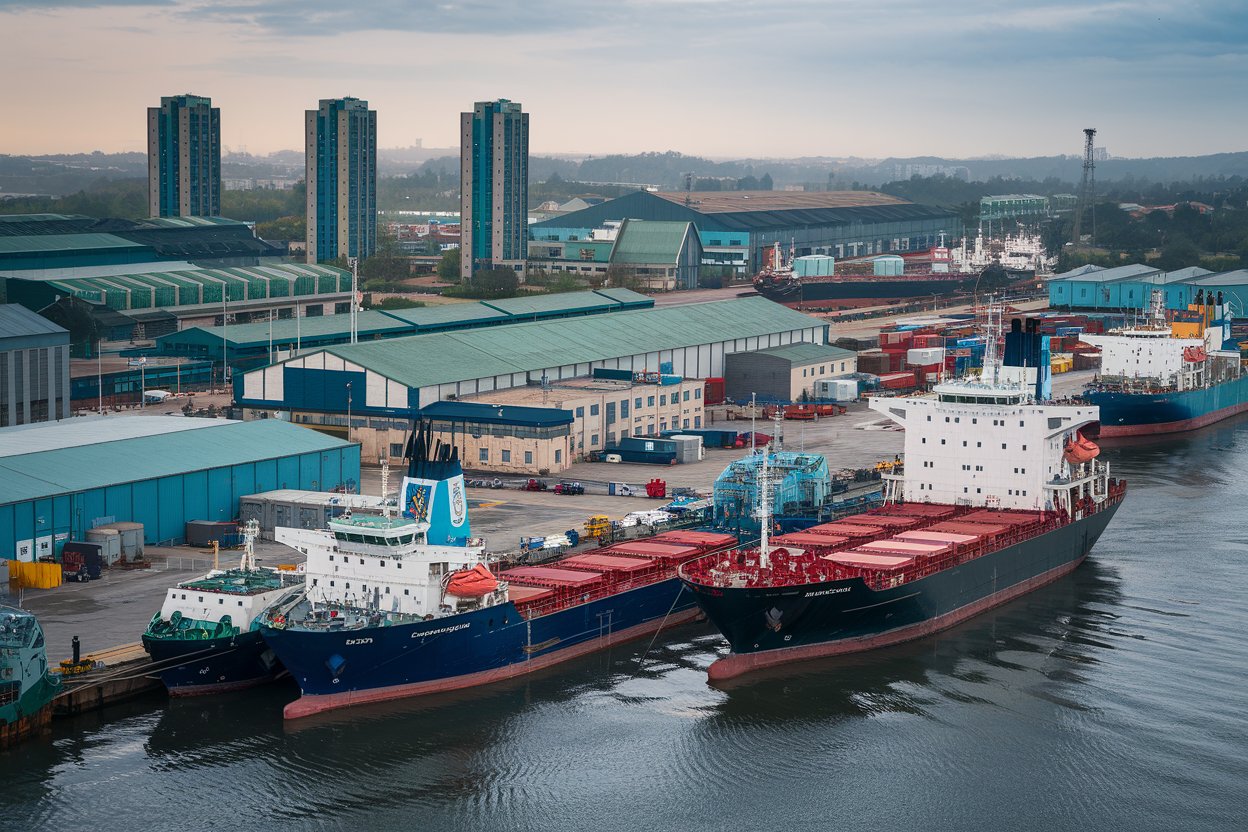
You think the customs declaration fee equals the agency fee plus the official tax fee?It’s actually 70% of the total fee.The company overpaid 20% of the cost in the "miscellaneous expense black hole" — Last week,I helped a lighting factory review their financial statements and found that their customs declarations contained three expenses that could have been avoided.
The "Below the Iceberg" Structure of Customs Declaration Fees: Explicit Costs VS Implicit Traps
The core conflict of customs declaration fees lies in the fact that:Explicit costs (agency fees,tariffs) are transparent and easy to compare,but implicit costs (operational errors,dispute fees) are like a "black hole" — 90% of enterprises only discover "overspending" during financial reconciliation,by which time the statute of limitations has already passed. These hidden costs often stem from three types of cognitive blind spots:
| Cognitive misconceptions | The consequences of the error | correct operation | Potential cost reduction opportunities |
|---|---|---|---|
| Just look at the agency fee quotation and ignore the actual cost and sales items | Attracted by the "low agency fees",they later found that the bill of lading modification fees and classification dispute fees drained their profits | Require the service provider to provide a "Detailed List of Fees",specifying the items included in the "fixed price" | 15%-25% |
| I think "correct classification means everything is fine". | When the customs questions the classification of the goods,there will be demurrage charges and administrative fees for re-classification | Before declaring customs,it is necessary to obtain a pre-determined HS code or entrust a service provider with qualifications in classification | 10%-15% |
| Ignore the correlation between the "declaration time limit" and the costs involved. | There will be a charge for amending the manifest due to the delay in its submission,or you may be forced to pay an "urgent customs clearance fee". | It is required that the service provider promise to meet the "deadline for submitting the manifest" and agree on the compensation clause for exceeding the time limit. | 5%-10% |
Customs Declaration Cost Optimization SOP: A 5-Step Implementation Method from Verification to Negotiation
Step 1: Visualize and break down the cost structure Output:
- Organizethecustomsdeclarationinvoicesofthepastthreemonthsandsortthemaccordingtothefollowingcategories:Agent’sfee/Officialtaxesandfees/fourmajorcomponents,asdetailedbelow:"Classificationstatistics(quicklysummarizedusingExcelPivotTables);"
- Marktheitemsthatappearrepeatedlyinthe"miscellaneousexpenses"(forexample,ifthe"manifestmodificationfee"appearsmorethan2times,itisnecessarytofocusonidentifyingtheloopholesintheoperatingprocess);
Step 2: Trace and verify the hidden costs Output:
- Verifythecoreinformationofthecustomsdeclarationform:HSCodeClassification(Self-checkusing"GeneralRuleofClassificationOne",orconsultthe"ChinaCustomsClassificationServiceNetwork")Cargomanifestinformation(Whetherthecontainernumber/numberofpackages/grossweightisconsistentwiththebilloflading);
- Interviewthecustomsdeclarationserviceproviders:Requirethemtoprovideawrittenexplanationofthe"miscellaneousfees",distinguishingbetween"uncontrollablecosts"(suchascustomsinspectionfees)and"avoidablecosts"(suchasmodificationfeescausedbyoperationalerrors);
Step 3: Design a cost optimization plan Output:
- Designalternativesolutionsforhigh-frequencymiscellaneousfees:
Output:
- Verifythecoreinformationofthecustomsdeclarationform:HSCodeClassification(Self-checkusing"GeneralRuleofClassificationOne",orconsultthe"ChinaCustomsClassificationServiceNetwork")Cargomanifestinformation(Whetherthecontainernumber/numberofpackages/grossweightisconsistentwiththebilloflading);
- Interviewthecustomsdeclarationserviceproviders:Requirethemtoprovideawrittenexplanationofthe"miscellaneousfees",distinguishingbetween"uncontrollablecosts"(suchascustomsinspectionfees)and"avoidablecosts"(suchasmodificationfeescausedbyoperationalerrors);
Step 3: Design a cost optimization plan Output:
- Designalternativesolutionsforhigh-frequencymiscellaneousfees:
– High error rate in manifests → Require service providers to add "Pre-review of the manifestprocedure (Cross-check manifest information with the freight forwarder before submitting the customs declaration);
– Classification disputes → Purchase Pre - ruling service for classification(approx.500 RMB per instance,preventing subsequent fines of tens of thousands of RMB);
Step 4: Prepare the bargaining chips for negotiations with the service provider Output:
- Organizethequotationlistsofsimilarserviceproviders(atleastthree)anduse"CostStructureComparisonTableasabasisfornegotiation(Focusingoncomparingthechargingstandardsformiscellaneousfees);
- DesignTieredPricingTerms:Iftheannualdeclarationvolumeexceeds500invoices,theagencyfeewillbereducedby15%;or"Lump-sumpricemodel(Stipulateacaponcustomsdeclarationfeepershipment",withanyexcessbornebytheserviceprovider);
Step 5: Contractual Obligations and Risk Isolation Output:
- Itisclearlystatedintheservicecontractthat.TransparentFeeTerms"Allunofficialexpensesmustbeconfirmedinwriting72hoursinadvance.Otherwise,thecompanyreservestherighttorefusetopaythem."
- AgreementErrorCompensationClause"Ifanyadditionalcostsareincurredduetotheserviceprovider’soperationalerrors(suchaserrorsinthemanifestormisclassification),theserviceprovidershallbeartheresponsibilityforthem."
Experts’ Private Collection: Hidden Dividends in Customs Declaration Fees under the RCEP Background
Output:
- Itisclearlystatedintheservicecontractthat.TransparentFeeTerms"Allunofficialexpensesmustbeconfirmedinwriting72hoursinadvance.Otherwise,thecompanyreservestherighttorefusetopaythem."
- AgreementErrorCompensationClause"Ifanyadditionalcostsareincurredduetotheserviceprovider’soperationalerrors(suchaserrorsinthemanifestormisclassification),theserviceprovidershallbeartheresponsibilityforthem."
Experts’ Private Collection: Hidden Dividends in Customs Declaration Fees under the RCEP Background
Many companies overlook the connection between the rules of origin of the RCEP and the customs declaration fees.If this issue can be resolved,it will greatly reduce the cost of customs declaration and enhance the competitiveness of Chinese enterprises in the global market.Regional value componentsThe determination of tariff preferences not only reduces "official taxes and fees",but also decreases the hidden costs arising from "classification disputes".It is recommended to conduct a "RCEP origin qualification self-check" once every quarter:
1.Download the "RCEP Origin Standard Inquiry System" and enter the product’s HS code;
2.If it meets the requirement that the "regional value content is ≥40%",the service provider is required to mark " " on the customs declaration form.The original of the Regional Comprehensive Economic Partnership (RCEP),avoiding missed preferential treatments due to classification errors;
(Note: Tariff preferences under RCEP must concurrently meet the Direct Consignment Rule,requiring prior confirmation of the transportation route with the freight forwarder)
There are three urgent actions that can be carried out today.
- Downloadnow"CustomsDeclarationFeeVerificationList(DMreply[CustomsDeclarationChecklist]toobtainthetemplate),andmarkwhichcategoryofcognitivemisunderstandings"yourenterprisebelongsto;
- Sendanemailtothecustomsdeclarationserviceprovider:Requestthemtoprovidethefollowinginformation:FeesBreakdownTemplateandSubmissiondeadlinecommitmentforthemanifest6.Thetemplatecanbereferencedfromtheexamplesinthisarticle.
- Self-checktheHScodesofthefivecoreproducts:Use"GeneralRuleofClassificationI"toverifywhetherthereisariskofclassificationdisputes(ifuncertain,youcanconsulttheCustomsClassificationCenter);
Was this helpful? Give us a like!
Contact our experts for compliance audits, precise quotes, and one-stop customs support.
Recent Comments (0) 0
Leave a Reply