
Brazil Solar Tariffs: Impact on Imports & Industry
or complex compliance issues.
clearance and fund security.
Recently,BrazilThe Management Committee of the Executive Committee announced an important decision that,from January 1,2024,the company will implement a new salary adjustment system.solar panels starting January 1,2024,and plans to reinstate tariffs on 324 related products within the next 60 days.This move aims to promote the development of Brazils domestic renewable energy industry and support a new industrialization based on innovation and sustainability.
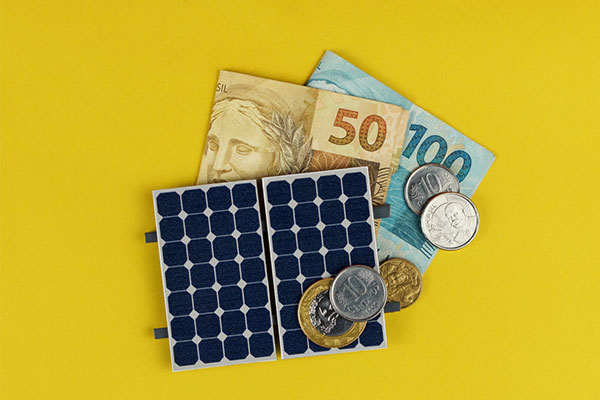
According to the official website of the Brazilian Ministry of Industry and Trade,solar panels will be subject to a 10.8% Common Market of the South (Mercosur) unified external tariff.To help the market adapt to this new regulation,GECEX has set a tax-free quota that will gradually decrease each year until 2027.Starting from 2024,the quota for importing solar panels will be reduced annually,amounting to $1.13 billion,$1.01 billion,$717 million,and $403 million respectively.
This decision has significant implications for Brazils solar market,especially considering that 99% of solar panels are imported from China.Brazil currently has a solar installed capacity of 10.3 GW,with an expected annual growth of 9.4 GW between 2023 and 2026.Brazilian Vice President Alckmin emphasized that achieving local production of solar power equipment is of strategic importance for Brazils energy security and low-carbon economic transition.
Meanwhile,Brazil is also undergoing a major tax system reform.On December 20,Brazils Congress passed a constitutional amendment aimed at simplifying the existing tax system by introducing a Value-Added Tax (VAT).This tax reform bill will merge five existing taxes,including the Industrial Products Tax,Income Tax,Social Integration Tax,Merchandise and Services Circulation Tax,and Service Tax.The new bill also increases import taxes on electric vehicles and provides partial tax incentives for fuel vehicle manufacturers in the Northeast and Midwest regions.
Against the backdrop of tax reform,Brazil has also decided to review the structure of the Mercosur Common External Tariff (CET).This review aims to address long-standing distortions and exceptional cases,such as "reverse tariff escalation," where the tariff rate on inputs in the production chain is higher than that on the final product.The Brazilian government hopes that this review will lead to proposals for a Common External Tariff that aligns with the realities of both Brazil and Mercosur.
The implementation of these new policies will have far-reaching impacts on Brazils solar industry,trade partners,and the entire Mercosur region.As the Brazilian government takes measures to improve the domestic industrial environment and encourage innovation and sustainable development,it is expected that Brazils renewable energy industry and overall economy will usher in new development opportunities in the coming years.
Was this helpful? Give us a like!
Contact our experts for compliance audits, precise quotes, and one-stop customs support.
Recent Comments (0) 0
Leave a Reply