
PV Export to Southeast Asia: Market Outlook & Opportunities
or complex compliance issues.
clearance and fund security.
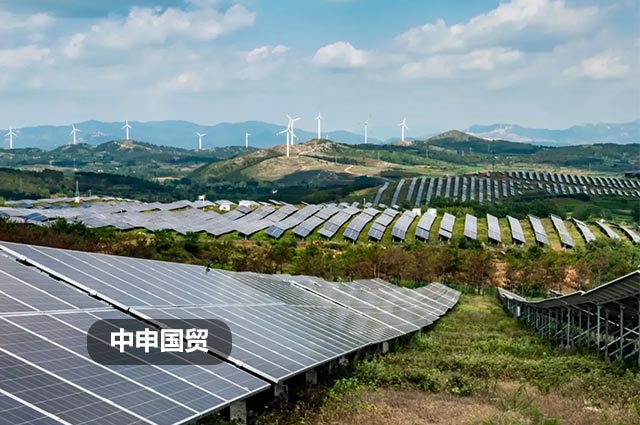
With the increasing global demand for renewable energy,the industry is developing rapidly on a global scale.Especially in Southeast Asia,with economic development and the growth of electricity demand,the prospects of the photovoltaic industry are very broad.However,entering this market also requires dealing with a series of challenges,such as the policy environment,market acceptance,infrastructure construction,etc.
I.Market Potential
The demand for photovoltaic products in the Southeast Asian market is growing rapidly.With the economic development of the region,the electricity demand is also increasing.At the same time,due to the abundant sunshine in the region,it has great potential for photovoltaic power generation.With the improvement of environmental awareness,the renewable energy policies in the region are gradually being improved,which is conducive to the development of the photovoltaic industry.
II.Export Opportunities
China is the worlds largest producer of photovoltaic equipment and has a strong export capacity.The growing demand for photovoltaic products in the Southeast Asian market provides export opportunities for Chinese photovoltaic enterprises.Especially in countries such as Indonesia,the Philippines,and Vietnam,due to their relatively rapid growth in electricity demand,the demand for photovoltaic products is relatively large.
III.Challenges and Countermeasures
Entering the Southeast Asian market also requires dealing with a series of challenges.First of all,it is necessary to understand and adapt to the local policy environment,such as tariff policies,subsidy policies,etc.Secondly,it is necessary to improve the market acceptance of products,such as improving the competitiveness of product quality,service,price,etc.In addition,due to infrastructure limitations,such as power grid construction,transportation facilities,etc.it may affect the transportation and use of products.
Generally speaking,the photovoltaicmarket has huge potential and opportunities,but there are also some challenges.Enterprises need to make full use of their own advantages,and at the same time,by studying factors such as the market,policies,and infrastructure,formulate strategies suitable for the local market to achieve successful exports and market expansion.
Was this helpful? Give us a like!
Contact our experts for compliance audits, precise quotes, and one-stop customs support.
Recent Comments (0) 0
Leave a Reply