
EV Charging Standards: EU vs. US Metering
or complex compliance issues.
clearance and fund security.
With the global pursuit of carbon neutrality goals,The automotive market is experiencing rapid development,which is not only a trend but also an irreversible global consensus.Particularly in the field of electric vehicles,the demand for related infrastructure,such as electric vehicle charging piles,is growing rapidly worldwide.Against this backdrop,the overseas charging pile market demonstrates immense development potential,especially in Europe and the United States.However,with the rapid expansion of the market,the standards,regulations,and metering requirements for charging piles have become new challenges for enterprises.
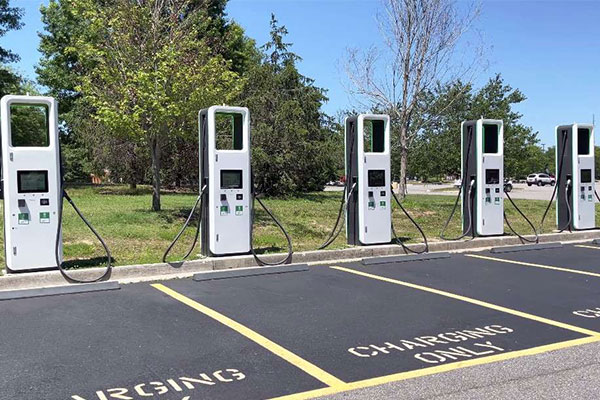
According to data from the China Association of Automobile Manufacturers,Europe and the United States are currently the main overseas markets for charging piles.Compared to China’s vehicle-to-pile ratio of 6.8:1,the ratio in Europe and the U.S.ranges between 15:1 and 20:1,indicating greater market potential and demand.Notably,on February 15,2023,the U.S.government officially released the final rule for its national electric vehicle charging network.It is projected that by 2030,electric vehicles will account for 50% of new car sales in the U.S.with plans to install 500,000 EV charging stations,undoubtedly presenting vast market opportunities for charging equipment manufacturers.
International standards and regulatory requirements for charging stations
When facing different markets,charging pile products must comply with various international standards and regulatory requirements.Currently,the international standards for charging pile connection structures mainly include the Chinese National Standard (GB/T 20234 series),the American standard CCS1,the European standard CCS2,and the Japanese standard CHAdeMO.Among these,the Combined Charging System (CCS) has emerged as the temporarily dominant standard design form internationally.
In Europe,as a metering device,charging piles must comply with the requirements of the MID 2014/32/EU Measuring Instruments Directive for export.This directive specifies the standards for product entry into the EU market,conformity assessment procedures,implementation deadlines,and other requirements,particularly the metering requirements for electricity meters,which primarily fall under Annex MI-003 of the MID Directive.
The United States,in the form of Federal Regulation 23 CFR 680,has set out the overall development plan and detailed requirements for charging pile products entering the US market.Although US regulations do not have specific certification requirements for the metrology of measuring instruments,the ANSI C12 series of standards is still the main assessment standard.
China’s mandatory verification system requirements and regional requirements
It is worth mentioning that China also has clear requirements regarding the mandatory verification system.In October 2020,domestic electric vehicle charging piles were included in the "Catalog of Measuring Instruments Subject to Mandatory Management," with mandatory verification implemented from January 1,2023.This includes inspections of appearance and labeling,operational errors,clock time errors,and other items,providing a standardized evaluation basis to ensure the metrological accuracy of charging piles.
Access to Measurement in Major European and American Markets
For Chinese production and export enterprises aiming to enter the European and American markets,researching and understanding the metrological access standards of these markets holds practical significance.Since charging piles have electricity metering functions,involving the measurement and billing of electricity consumption,exports must not only meet basic electrical safety and environmental protection requirements but also comply with local metrological technical regulations and corresponding metrological standard requirements.
European Market Measurement Access:
In the European Union,the metrological approval of charging pile products is primarily governed by the Measuring Instruments Directive (MID) 2014/32/EU.This directive covers a range of measuring instruments,including devices used for commercial transactions and public metering.For charging piles,this means they must meet specific metrological and technical requirements to ensure the accuracy of energy measurement and the protection of consumer rights.
1.MID command requirements:As a measuring instrument,the charging pile must comply with the relevant requirements of the MID Directive,including but not limited to performance,reliability,data protection,and transparency of user information.Specifically,the metering requirements for the charging pile’s electricity meter mainly apply to Annex MI-003 of the MID Directive,which covers the technical specifications and testing standards for electricity meters.
2.Certification and Testing:The charging pile must undergo testing and evaluation by a certification body to obtain the CE mark and MID certification.This process typically includes type examination,sample testing,and review of the production process.The testing standards are primarily based on the EN 50470 series,especially EN 50470-3:2022,covering requirements such as insulation performance,accuracy,electromagnetic compatibility (EMC),and safety.
Measurement Access in the U.S.Market:
The metering access requirements for charging stations in the United States do not have as unified a regulatory framework as in Europe.However,in certain states and regions,there are specific standards and requirements,particularly regarding the metering accuracy of electricity meters and charging services.
1.Federal and state-level requirements:Although there are no specific federal regulations in the United States targeting charging pile metering,some states such as California and New York have begun implementing their own standards and requirements.These standards primarily focus on the metering accuracy of charging services and consumer protection.
2.ANSI Standard:The ANSI C12 series standards issued by the American National Standards Institute (ANSI),particularly ANSI C12.1-2008 and ANSI C12.20-2015,are widely used for the performance evaluation of electricity meters.Although these standards were originally designed for traditional electricity meters,their requirements for metering performance and accuracy of electrical energy also apply to the metering systems of electric vehicle charging stations.
3.Electricity meter testing and certification:In the United States,the meter portion of charging stations must undergo specific tests to verify that their metering performance complies with ANSI standards.This typically includes accuracy tests,environmental adaptability tests,and durability tests.Charging stations that pass these tests can obtain the corresponding certification mark,proving they meet the metering requirements of the U.S.market.
Differential comparison analysis
Although the metering standards in mainstream international target markets are primarily adapted and adopted based on the IEC 62053 series of standards,the specific requirements for charging pile equipment applications vary depending on the actual conditions of different countries and regions.This necessitates that enterprises closely monitor the latest legal and regulatory requirements,relevant standards,and metering parameter indicators of the importing regions when exporting charging piles,ensuring that the exported products comply with the requirements of the destination country.
Was this helpful? Give us a like!
Contact our experts for compliance audits, precise quotes, and one-stop customs support.
Recent Comments (0) 0
Leave a Reply