
Exporting Machinery to Thailand: A Compliance Guide
or complex compliance issues.
clearance and fund security.
What qualification documents are required for the export of mechanical equipment to Thailand?Three key steps in the Thai customs clearance process
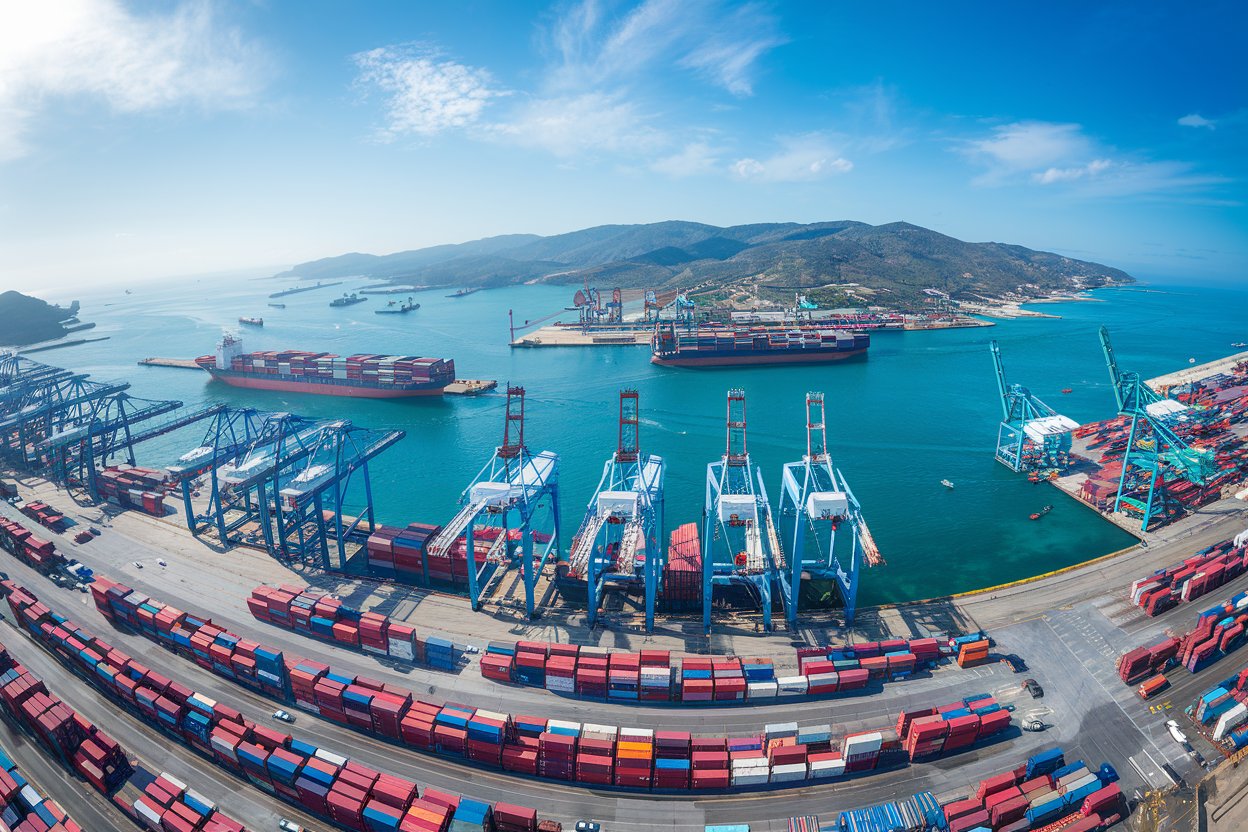
MechanicalWhat qualification documents are required in Thailand?
Three core documents need to be prepared before exporting to Thailand:
1) Export license and commodity inspection certificate required by the Chinese customs (for specific equipment)
2) Thailand TISI certification (products within the mandatory catalog)
3) Certificate of origin (FORM E enjoys tariff preferences).It is recommended to confirm with a professional agency six months in advance the access requirements corresponding to the HS code of the product.Some construction machinery also need to apply for the BOI Investment Promotion Certificate.Submission through the Pre - notification System (PNS)
Special technical requirements of the Thai market
1) : The electronic customs declaration form,including 12 elements such as commodity description and value declaration,must be filled in 24 hours before the cargo ship arrives at the port.: Tariff calculation
2) : The basic tariff rate for mechanical equipment is 5% - 20%,plus a 7% value - added tax.: Physical inspection
3) : The Thai customs conducts a 10% spot - check on mechanical equipment,focusing on verifying the consistency between the serial number and the declaration.: Thailand requires that the packaging of mechanical equipment must:
Packaging and transportation specifications that must be noted
1) Use IPPC - certified wooden boxes
2) Mark operation warning signs in both Thai and English
3) Configure a moisture - proof layer (humidity requirement 65%).It is recommended to choose Laem Chabang Port as the preferred unloading port and purchase insurance to cover special risks during the typhoon season (May - October).
1) Voltage standard: Industrial equipment needs to be compatible with a dual - voltage system of 220V/380V2) Safety certification: Pressure vessels must obtain a PCD supervision certificate
Special Technical Requirements for the Thai Market
3) Environmental protection requirements: Diesel engines must meet the Tier 3 emission standard.It is recommended to check the latest technical regulations updates through the official website of the Thai Industrial Standards Institute (TISI).
Professional agency companies can provide:
1) Optimization of HS code classification (reasonably reducing tariff costs)
Core value points of foreign trade agency services
2) Localized label production services
3) Acting application for Thai import license (IDP)
4) Bonded warehousing solutions.Take the export case of an injection molding machine as an example.By rationally using the FORM E certificate of origin,the tariff was successfully reduced from 15% to 5%.
A: It is necessary to apply for a second - hand permit from the Thai Ministry of Industry and provide a certificate of the equipments service life.
A: It is recommended to declare it separately as machine parts and enjoy a preferential tax rate of 0 - 5%.A maintenance contract needs to be provided as evidence.
Frequently Asked Questions
This article details the process of textile exports to the EU,including steps such as market research,product compliance confirmation,document preparation,transportation selection,and customs clearance and delivery,and emphasizes precautions,such as product quality and technical standards,label and packaging requirements,and compliance risk management.At the same time,it expounds on the important role of foreign trade agency service companies in the export process,such as providing professional consultation,efficiently handling documents,logistics and customs clearance services,and risk control and after - sales support.Finally,it supplements the main content of EU textile label regulations and relevant information on non - mandatory labels.This article comprehensively analyzes the classification,declaration elements,and compliance requirements for textile and clothing imports and exports,covering HS code rules and technical standards of various countries,helping enterprises to smoothly pass customs and enhance their international market competitiveness.
Was this helpful? Give us a like!
Contact our experts for compliance audits, precise quotes, and one-stop customs support.
Recent Comments (0) 0
Leave a Reply