
Analysis of 2024 US HBM Export Control Rules & Response Strategies for Chinese Enterprises
or complex compliance issues.
clearance and fund security.
With the rapid development of artificial intelligence (AI) technology,high-bandwidth memory (HBM) has become a core component driving the performance improvement of modern computing systems.However,amid intensifying global technological competition,the United States officially introduced new export control regulations for HBM on December 2,2024,imposing restrictions on specific countries and regions,including China,through technical parameter thresholds and stringent export licensing requirements.This article aims to analyze the core content and implications of the new regulations,while providing response recommendations for affected enterprises.
I.What is HBM and its importance
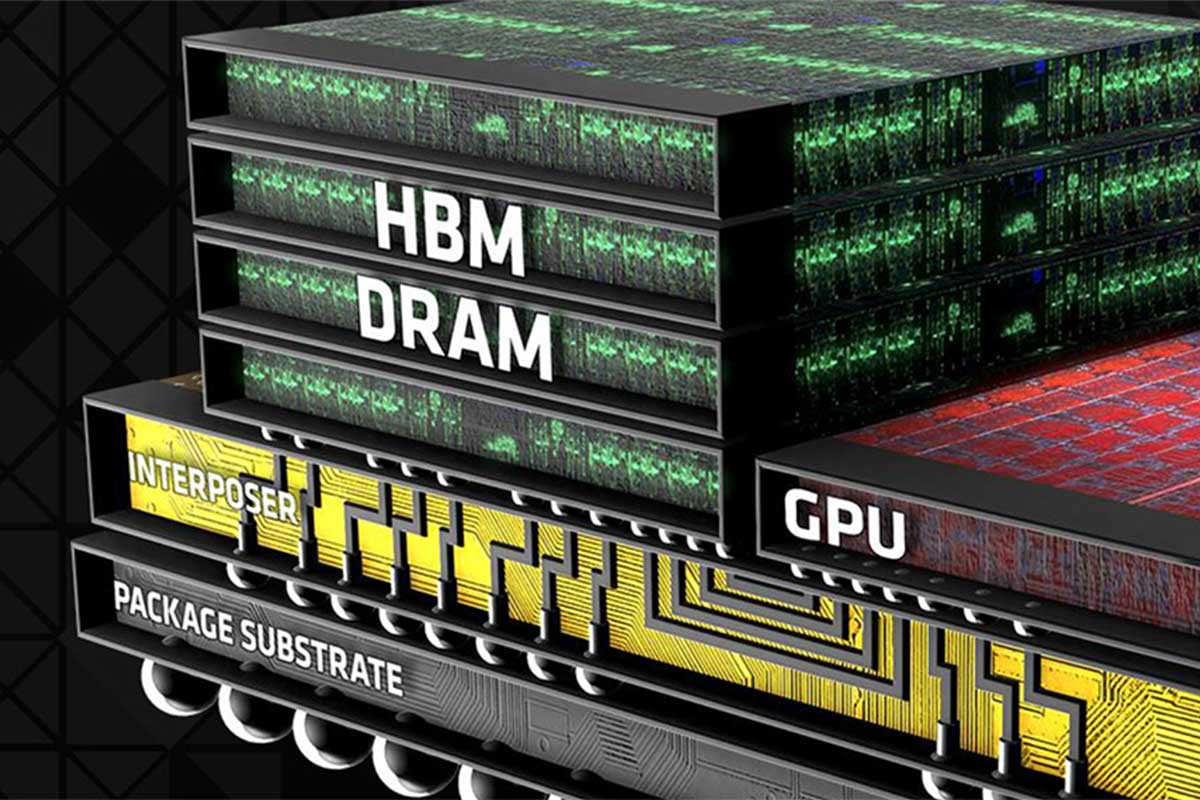
HBM is an advanced storage technology designed specifically for high - performance computing and data - intensive applications.It is widely used in GPUs,TPUs,and other dedicated AI accelerators.Through 3D stacking technology and Through - Silicon Via (TSV) process,HBM achieves high - density integration and high - speed data transmission,which is a key storage solution to meet the needs of AI training and inference.
In recent years,HBM technology has undergone rapid iteration from HBM1 to HBM3E,with the market share primarily dominated by three major manufacturers: Samsung Electronics,SK Hynix,and Micron Technology.SK Hynix leads with a 53% market share,while Samsung and Micron hold 38% and 9% respectively.
II.Analysis of the new HBM export control regulations
Core content (What) Output:
The new regulations,through the technology classification of the US Export Administration Regulations (EAR),especially by adding strict technical thresholds under ECCN 3A090.c,include HBM with a memory bandwidth density higher than 2 GB/s/mm2 into the scope of strict control.The new regulations emphasize the controlled nature of independent HBM stacks.However,if the HBM has been packaged with a logic chip as a whole,it will be handled according to other provisions.This direct limitation on technical performance ensures the USs precise control over key technologies.
Affected parties (Who) Output:
The new regulations cover all enterprises involved in the export,re - export,or in - country transfer of HBM to China and other countries in Group D: 5,including major HBM manufacturers such as Samsung,SK Hynix,and Micron.In addition,all HBM products produced using US technology,equipment,or software,regardless of the place of origin,must comply with this regulation.
Implementation Time (When) Output:
The new regulations came into effect on December 2,2024,and a compliance buffer period was set until December 31,2024.During this period,relevant enterprises need to complete technical classification,license application,and supply chain adjustments to achieve full compliance.
Scope of Application (Where) Output:
The new regulations apply to the global HBM supply chain.Through the Foreign - Direct - Product Rule (FDPR),the US can exercise extraterritorial jurisdiction over HBM products produced based on its technology.Regardless of where the HBM is produced,as long as US technology or equipment is used,the new regulations must be complied with.
Underlying Intention (Why) Output:
The new regulations aim to prevent specific countries from obtaining advanced HBM technology,thus delaying their technological progress in the fields of AI and high - performance computing (HPC).This is a core means for the US to ensure its technological superiority and national security.
Means of Execution (How) Output:
The US enforces the new regulations through means such as technical parameter control,license applications,and supply chain monitoring.At the same time,it sets license exceptions for some eligible enterprises,allowing them to continue operating under specific conditions.

III.Impact of the New Regulations on the Industrial Chain
Changes in the Global Supply Chain Pattern Output:
The new regulations will significantly affect the stability of the global HBM supply chain.Korean enterprises (SK Hynix,Samsung),as major suppliers,will face additional review pressure for export licenses,while Micron may gain a competitive advantage in the global market with a higher degree of policy compliance.
Impact on Chinese Enterprises Output:
In the short term,Chinese enterprises may face the risks of supply disruptions and cost increases.In AI and HPC projects,the dependence on HBM may lead to restricted technology planning,thus delaying system iterations.
Long - term Impact on the Technological Ecosystem Output:
The new regulations,through precise technical thresholds and a dual - control strategy,block the path for target countries to easily obtain high - performance HBM.At the same time,it prompts enterprises to optimize supply chain management and enhance their own technical capabilities.
IV.Response Strategies of Chinese Enterprises
Short - term Measures: Ensure the Stability of the Supply Chain Output:
- ProcurementandStockpiling:BypurchasingHBM2EchipsfromKoreanmanufacturers,itprovidesbuffertimeforprojects.
- CompliancePreparation:Formaprofessionalteam,monitorinternationalpolicytrends,andadjustprocurementandinventorymanagementinatimelymanner.
Long - term Measures: Autonomization of the Supply Chain Output:
- TechnicalResearchBreakthrough:ConcentrateonbreakingthroughcoretechnologiessuchasTSVand3Dpackaging,andpromotetheresearchanddevelopmentofdomesticHBM.
- IndustryAlliance:Strengthencooperationbetweenupstreamanddownstreamenterprisesandestablishacompletelocalsupplychainsystem.
- PolicySupport:Utilizetaxincentivesandindustrialfundstoacceleratethecommercializationofkeytechnologies.
Risk Management and Diversified Layout Output:
- DiversifiedSupplyChain:Establishcooperativerelationshipswithmultiplesupplierstodiversifyrisks.
- AlternativePlan:Reservealternativeplansforkeytechnologyroutestocopewithpolicychanges.
V.Summary and Outlook
Output:
- TechnicalResearchBreakthrough:ConcentrateonbreakingthroughcoretechnologiessuchasTSVand3Dpackaging,andpromotetheresearchanddevelopmentofdomesticHBM.
- IndustryAlliance:Strengthencooperationbetweenupstreamanddownstreamenterprisesandestablishacompletelocalsupplychainsystem.
- PolicySupport:Utilizetaxincentivesandindustrialfundstoacceleratethecommercializationofkeytechnologies.
Risk Management and Diversified Layout Output:
- DiversifiedSupplyChain:Establishcooperativerelationshipswithmultiplesupplierstodiversifyrisks.
- AlternativePlan:Reservealternativeplansforkeytechnologyroutestocopewithpolicychanges.
V.Summary and Outlook
The new US HBM export control regulations are not only a technical restriction but also a game in the global technology competition.Facing the challenges of the new regulations,Chinese enterprises need to adopt comprehensive strategies,not only to cope with short - term supply chain pressures but also to achieve technological breakthroughs and industrial chain reconstruction in the long term.
In the future,the technological competition in high - performance memory will intensify further.As a core component of AI and HPC,the development direction and market pattern of HBM will profoundly affect the global technology ecosystem.Only by maintaining a keen market sense and a solid technical foundation can enterprises remain invincible in a complex international environment.
Was this helpful? Give us a like!
Contact our experts for compliance audits, precise quotes, and one-stop customs support.
Recent Comments (0) 0
Leave a Reply