
Canada Trade Cases: Key Rules for Exporters
or complex compliance issues.
clearance and fund security.
I.Background Overview
On December 21,2020,the Canada Border Services Agency (CBSA) initiated anti-dumping and countervailing investigations on household upholstered seating originating from China and Vietnam,referred to as the "UDS case." On May 5,2021,the CBSA issued a preliminary ruling on the related upholstered seating,estimating dumping margins ranging from 11.01% to 206.36% and subsidy margins ranging from 0.00% to 89.54%.By August 3,2021,the final ruling determined dumping margins of 0% to 188.0% and subsidy margins of 0.0% to 81.1%.
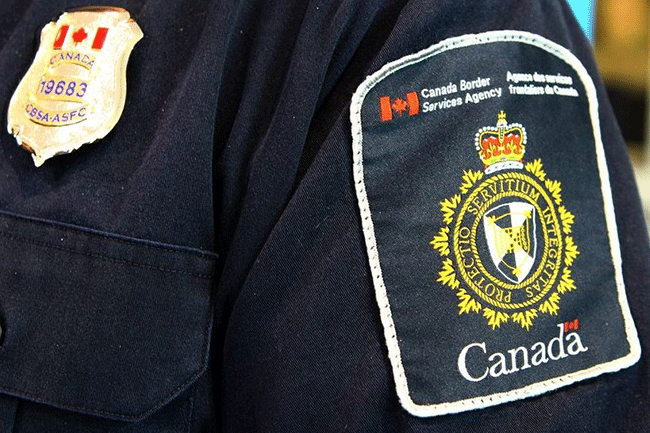
When we closely observe the comparison of Canadian anti - dumping investigations with those of other countries such as the United States,the European Union,Australia,and India,we can find that it has distinct characteristics.
II.Canadian Anti - dumping and Counter - vailing Regulations
Canadian anti - dumping and counter - vailing rules are mainly contained in the Special Import Measures Act (SIMA) and the Special Import Measures Regulations (SIMR).Among them,SIMA is the basic regulation,and SIMR is the implementation details.In addition,the D14 series of departmental memorandums also provide the CBSA with interpretations of laws and regulations.
III.Rules of Investigation Procedures
Sampling procedures are not commonly used
Canada only stipulates that the dumping margin can be calculated based on sampling in anti - dumping investigations,while there is no sampling regulation in counter - vailing investigations.Such a regulation means that most Chinese enterprises need to re - consider their strategies and methods of participating in the response.
(1) Sorting out SIMA/SIMR rules
Article 30.3 of SIMA allows for the calculation of dumping margins based on sampling.When the number of exporters,producers,or products involved is too large to make it impractical to calculate dumping margins for all products,CBSA has the authority to decide to conduct a sampling investigation.
(2) Impact of not using sampling procedures on Chinese enterprises
This approach of not employing sampling may require Chinese enterprises to reconsider their strategies in anti-dumping investigations.In the sampling procedure,only a few companies need to respond in detail,while others can "free ride," obtaining the average duty rate of the sampled enterprises with minimal response efforts.However,in the absence of sampling,each company must respond independently.
The deadline may not be specified in the supplementary questionnaire
When issuing supplementary questionnaires,the CBSA may not set a specific submission deadline but instead require companies to respond "as soon as possible."
IV.Rules of Investigation Entities
Rules for determining the dumping margin / normal value
(a) Trace back to the production month of the sold product and report the production cost of that month.
(b) For enterprises with multiple production bases,sales and cost data need to be provided separately for each production base.
Taxation Methods
(1) Anti - dumping Duty
When the CBSA makes a preliminary ruling on a certain commodity and determines the existence of dumping,it will impose an ad valorem tax on the products involved during the period of the provisional ruling measures according to the dumping margin determined by the investigation.
According to the anti - dumping duty collection method of the CBSA,it is calculated based on the normal value of each exporter finally calculated by the investigation authority.That is,if an exporters export price is higher than the normal value determined by the CBSA,no tax needs to be paid; if it is lower than the normal value,the anti - dumping duty needs to be paid according to the price difference part.
The CBSA levies taxes according to the quantity of products,that is,calculates the tax amount according to the dumping margin per kilogram,per ton or per bushel.
For enterprises that do not participate in the response to the lawsuit or do not cooperate,the CBSA may levy taxes according to the average dumping margin of all cooperative enterprises.
After the final determination,the CBSA will adjust the duties collected during the preliminary measures based on the rates determined in the final determination,following the principle of "refunding any overpayment without collecting any underpayment."
(2) Countervailing Duty:
The CBSA levies taxes according to the subsidy amount per unit of goods,that is,the countervailing duty payable = import quantity × subsidy amount per unit of product.
According to the anti - dumping duty collection method of the CBSA,it is calculated based on the normal value of each exporter finally calculated by the investigation authority.That is,if an exporters export price is higher than the normal value determined by the CBSA,no tax needs to be paid; if it is lower than the normal value,the anti - dumping duty needs to be paid according to the price difference part.
The collection of countervailing duties will consider the type,scale of the subsidy and its impact on the market.For example,the CBSA may pay more attention to production subsidies,while for some non - production subsidies,the CBSA may give a lower tax rate.
Rules for Foreign Associated Suppliers to Respond to the Lawsuit
The CBSA requires not only the production and sales enterprises of the products involved to participate in the response to the lawsuit,but also their associated raw material suppliers to fill out the complete cost and countervailing questionnaires.

For export enterprises,the anti - dumping and countervailing investigation rules of Canada bring a series of challenges.Enterprises need to have an in - depth understanding of these rules and formulate appropriate response strategies to ensure that their products can continue to sell well in the Canadian market.
Was this helpful? Give us a like!
Contact our experts for compliance audits, precise quotes, and one-stop customs support.
Recent Comments (0) 0
Leave a Reply