
Brake Pads & Rotors Export Guide: Regulations & Processes
or complex compliance issues.
clearance and fund security.
Related Introduction
With the rapid development of the automotive industry,more and moreare exported to all over the world.Among them,automotive brake pads and brake discs are relatively common export parts.As acompany,it is necessary to understand some precautions and the export process.
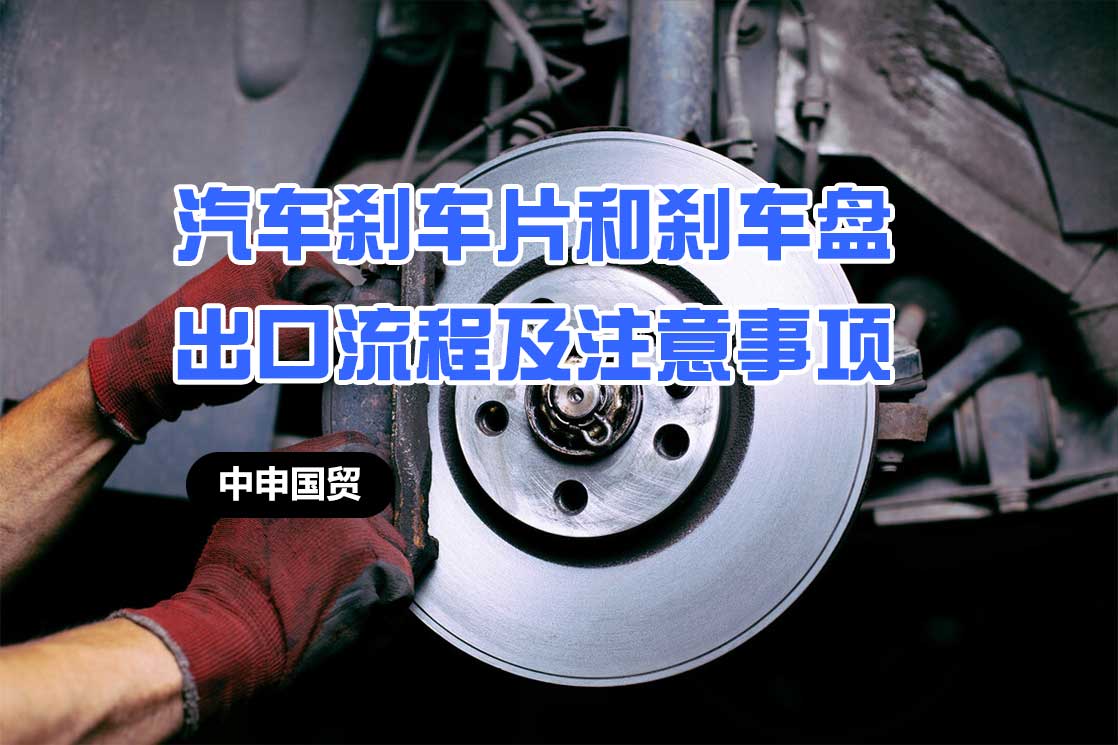
Precautions:
Understand the regulatory requirements of the target market: The automotive industry regulations in different countries and regions are different,and it is necessary to understand the regulatory requirements of the target market.For example,the European market has relatively strict quality standards and testing requirements for brake pads and brake discs.
Check product quality: To ensure that products meet the requirements of the target market,the export agency company needs to inspect and test the products.For example,in the European market,brake pads and brake discs need to pass the ECE - R90 certification.
Prepare complete export documents: including contracts,commercial invoices,packing lists,export licenses and other documents.
Determine the freight mode and cost: Select the most appropriate freight mode,considering factors such as time,cost and risk.For example,andis the most commonly used freight mode.
Handle customs formalities: The export agency company needs to handleformalities to ensure that products can be legally exported.At the same time,it is also necessary to understand the import requirements and tariff regulations of the target market.
Export process:
Confirm the order and contract: Confirm the customers order and sign the contract.
Quality inspection and inspection: Conduct quality inspection and inspection of the products to ensure compliance with the standards of the target market.
Prepare export documents: Prepare all necessary export documents,such as commercial invoices,packing lists,export licenses,etc.
Arrange freight: Select the most appropriate freight mode and flight/shipment schedule,and arrange the shipment and transportation of goods.
Handle export customs declaration formalities: Handle export customs declaration formalities and submit all necessary documents and certificates.
Payment and settlement: Reach payment and settlement agreements with customers to ensure the timely collection of payment for goods and fees.
Tracking and tracing: Track the transportation and delivery of goods and promptly solve possible problems.
EU regulations require:
E - mark: The EU requires that all auto parts must comply with the E - mark certification,which indicates that the product has passed the EUs certification process and meets European safety,environmental protection and quality standards.
REACH: REACH is a regulation on chemicals formulated by the European Union,which means that all products exported to Europe must meet the requirements of REACH,including the registration,evaluation,authorization and restriction of substances.
RoHS: The RoHS regulation requires that materials in all electronic and electrical products should not contain harmful substances such as lead,mercury,cadmium,hexavalent chromium,polybrominated biphenyls and polybrominated diphenyl ethers to reduce the impact on the environment and human health.
US regulations require:
FMVSS: The US Federal Motor Vehicle Safety Standards (FMVSS) are the US governments safety standard requirements for all automobiles and auto parts sold in the US.Brake pads/brake discs must meet the safety requirements of FMVSS 135.
DOT: The US Department of Transportation (DOT) requires that all auto parts exported to the US must meet the certification and labeling requirements of DOT to ensure that products meet US safety and quality standards.
CPSIA: The US Consumer Product Safety Improvement Act (CPSIA) requires that all consumer products must meet safety standards to protect the safety and health of consumers.
In conclusion,when acting as an agent for the export of automotive brake pads/brake discs,it is necessary to carefully understand the regulatory requirements and product quality standards of the target market,prepare complete export documents,select the most appropriate freight mode and flight/shipment schedule,and handle export customs declaration formalities.At the same time,the agent also needs to maintain good communication and cooperation with the customer to ensure the successful completion of the order.
Was this helpful? Give us a like!
Contact our experts for compliance audits, precise quotes, and one-stop customs support.
Recent Comments (0) 0
Leave a Reply