
Glove Classification Guide: HS Codes & Material Rules
or complex compliance issues.
clearance and fund security.
AsA crucial part of the business,the commodity classification of gloves is often a challenging task.Whether for medical use,protection,or sports,the material and purpose of each type of glove determine its customs classification.To assist you in completing the classification more accurately when importing or exporting gloves,today we will discuss the classification principles for gloves made of different materials.Let’s explore this seemingly complex "glove world" in a relaxed manner.
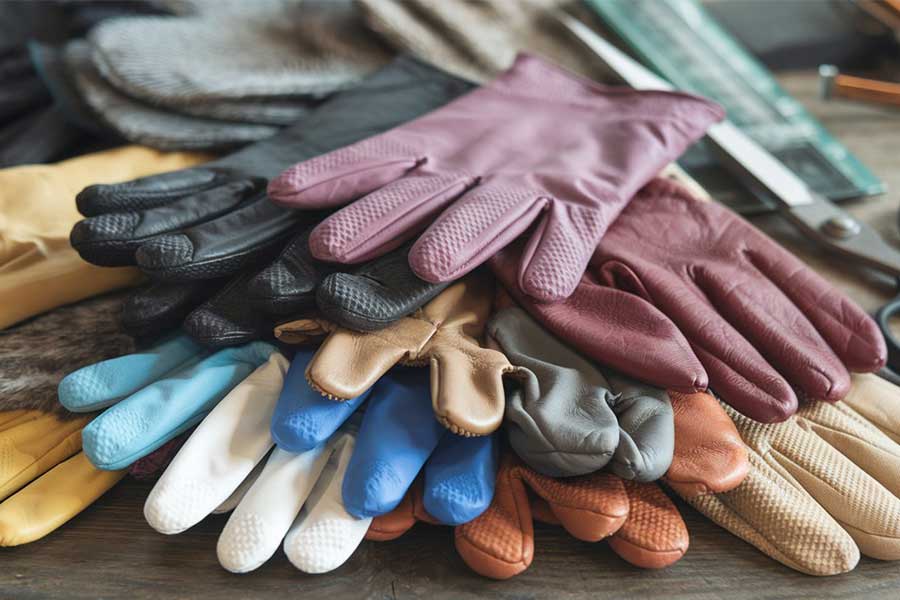
Fur gloves
Plastic gloves mainly include disposable protective gloves made of polyvinyl chloride (PVC) or polyethylene,which are widely used in cleaning,food handling and other occasions.
Classification Tariff Number: 3926.2011 / 3926.2019
Plastic gloves include polyvinyl chloride (PVC) gloves and polyethylene gloves.Polyvinyl chloride gloves should be classified under the tariff item number3926.2011,while gloves made of other plastic materials are classified under3926.2019.The main basis for classification lies in the chemical composition of the gloves - whether it is polyvinyl chloride.Therefore,when declaring,it is necessary to confirm the specific classification according to the material of the gloves.
Gloves made of vegetable materials
Rubber gloves include nitrile rubber gloves and latex gloves for various occasions such as medical and industrial use,with good elasticity and chemical resistance.
HS Code: 4015.1200 / 4015.1900
Rubber gloves include nitrile rubber gloves and latex gloves.Among them,Medical glovesshould be classified into4015.1200,while rubber gloves for other purposes (such as household or industrial use) are classified into4015.1900.The key to classification lies in the use - there are obvious functional differences between medical gloves and gloves for other purposes,so the HS codes are also different.
Paper gloves
Leather gloves are suitable for different purposes such as sports and protection,with comfort and durability,and are commonly seen in fields such as cycling and labor protection.
HS Code: 4203.2100 / 4203.2910
Leather gloves are classified according to their uses.Sports glovesare classified into4203.2100,and leather gloves for other purposes are classified into4203.2910.Leather gloves for different purposes have significant differences in design and function.Sports gloves emphasize comfort and flexibility,while other leather gloves pay more attention to protection or warmth.
Gloves for infants and young children
Fur gloves are made of natural fur or artificial fur,usually used for warmth and suitable for outdoor activities in winter.
HS Code: 4303.1020 / 4304.0020
Gloves with fur or artificial fur as the fabric should be classified into4303.1020(natural fur) or4304.0020(artificial fur) according to the type of fur.Fur gloves often have good heat - retaining properties and are an ideal choice for outdoor activities in winter.
Gloves not for infants and young children
Gloves made of plant materials,such as loofah gloves,are mainly used for bathing and cleaning,with good water absorption and massage effects.
HS Code: 4602.1990
For example,loofah gloves,which are made of natural plant materials and mainly used for bathing and cleaning,are classified into4602.1990.This kind of gloves,due to their unique material,have strong water absorption and a gentle massage effect.
Textile gloves combined with plastic or rubber
Paper gloves are mainly disposable sanitary products,commonly used in medical and food handling occasions,being lightweight and inexpensive.
HS Code: 4818.5000
Paper - made gloves,usually disposable sanitary products,are classified into4818.5000.They are generally used in fields such as medical and food handling.Because paper gloves are lightweight and inexpensive,they are the best choice for single - use.
Heating gloves
Gloves for infants and young children are made of soft materials to ensure the protection of the babys skin,and are suitable for warmth and outdoor activities.
HS Code: Heading 61.11 / 62.09
Gloves for infants and young children are classified into Heading(knitted or crocheted) or(not knitted or crocheted) according to whether they are61.11knitted or crocheted62.09.The materials of gloves for infants and young children are usually softer to ensure the protection of the babys skin.
Friction gloves
Gloves for non - infants and young children,including knitted or crocheted textile gloves,are widely used in various occasions such as home,work and warmth - keeping.
HS Code: Heading 61.16 / 62.16
Textile gloves for adults are also classified into Heading61.16or62.16according to whether they are knitted or crocheted.This kind of gloves has a wide range of uses and can be used for housework,warmth - keeping or other occasions.
Asbestos gloves
This kind of gloves is composed of a combination of rubber or plastic and textile materials,commonly used in industrial environments,with anti - slip and protective functions.
HS Code: 6116.1000
If the gloves are composed of a combination ofrubber coatingand knitted textile materials,they should be classified into6116.1000.This kind of gloves is commonly seen in industrial operations and has good anti - slip and protective functions.
Plastic gloves mainly include disposable protective gloves made of polyvinyl chloride (PVC) or polyethylene,which are widely used in cleaning,food handling,and other occasions.
Heated gloves have built - in electronic heating components,are suitable for use in cold environments and provide extra warmth.
HS Code: Heading 61.16 / 62.16
Gloves with electronic heating components need to be classified into Heading61.16or62.16according to their technology and fabric.This kind of gloves is particularly common in outdoor activities in winter because the heating function can provide extra warmth.
Classification tariff number: 3926.2011 / 3926.2019
Friction gloves,or so - called alliance - washing gloves,are mainly used for massage and cleaning during bathing,with a gentle exfoliating effect.
HS Code: 6302.9
“Friction gloves” or alliance - washing gloves are mainly used forMassage or cleaning,classified into6302.9.They are usually made of textile materials and are suitable for use during bathing.
Plastic gloves include polyvinyl chloride (PVC) gloves and polyethylene gloves.Polyvinyl chloride gloves should be classified under the tariff number,and gloves made of other plastic materials are classified under.The main basis for classification lies in the chemical composition of the gloves - whether it is polyvinyl chloride.Therefore,when declaring,it is necessary to confirm the specific classification according to the material of the gloves.
Asbestos gloves are mainly used in high - temperature environments,have good fire - resistant and heat - resistant properties,and are suitable for special industrial operations.
Classification tariff number: 6812.9100
TakeAsbestos materialsgloves with a matrix,classified into6812.9100.Due to their high - temperature tolerance,these gloves are mainly used in special working environments that require fire and heat protection.
Conclusion
Through the classification and analysis of gloves of different materials and uses,we can see the logic and principles behind the classification of commodities: material,use,and process are the main factors determining how gloves are classified.Accurate classification can not only help enterprises pass customs smoothly but also reduce uncertainties and potential risks during customs clearance.I hope this article can provide you with useful reference and help you handle the import and export of gloves with ease.If you have further questions,you are welcome tocontact us!
Was this helpful? Give us a like!
Contact our experts for compliance audits, precise quotes, and one-stop customs support.
Recent Comments (0) 0
Leave a Reply