
Guide to Tea Export Quality: Pesticide, SO2, Lead Compliance
or complex compliance issues.
clearance and fund security.
As one of Chinas important export commodities,tea is highly favored in the global market due to its rich cultural background and health benefits,especially in recent years.However,tea exports are not just about logistics but also about strict compliance with a series of laws,regulations,and food safety standards in the exporting country.Are enterprises fully prepared,particularly in controlling pesticide residues,sulfur dioxide,and heavy metal content?This article focuses on the main quality standards for tea exports,emphasizing the maximum residue limits and testing methods for pesticides,sulfur dioxide,and heavy metals (such as lead) in tea.
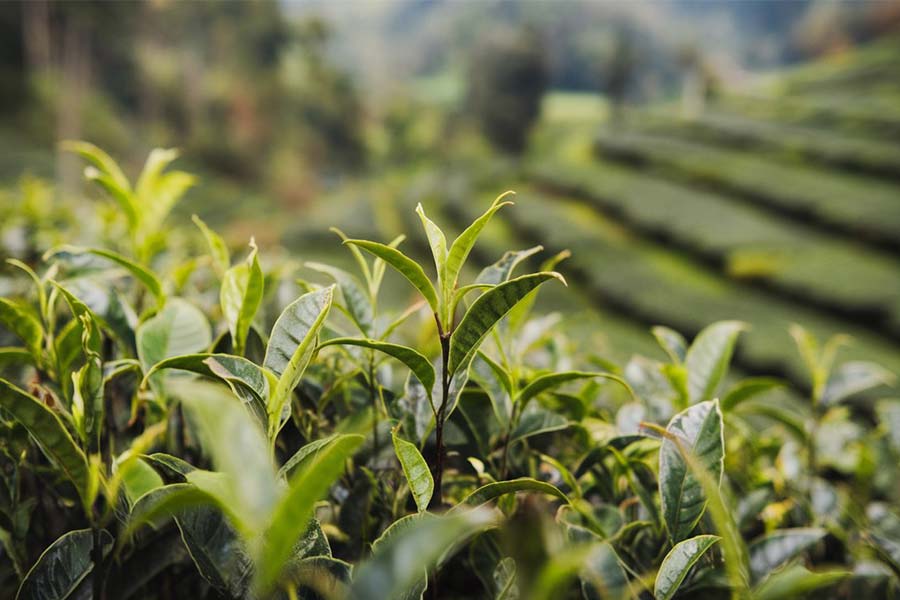
Pesticide Residues: Ensuring Tea Safety and Compliance
1.1 Definition of Maximum Residue Limits for Pesticides Output:
The Maximum Residue Limit (MRL) refers to the maximum concentration of pesticide residues allowed in food.It is an important technical indicator for assessing the quality and safety of agricultural products.Export tea must comply with relevant regulations on pesticide residues in different countries and regions.For pesticide residue control in tea,China has established multiple standards,such as GB 2763—2021 National Food Safety Standard—Maximum Residue Limits for Pesticides in Food.
1.2 Common Pesticides and Their Maximum Residue Limits Output:
In tea garden management,using pesticides to prevent pests and diseases is a common agricultural practice.According to the China Pesticide Information Network,as of September 19,2023,there are 904 registered pesticide products for tea gardens in China,involving 83 active ingredients,including insecticides,herbicides,and fungicides.Below are some common pesticides and their maximum residue limits in tea (unit: mg/kg):
- Acephate:0.05
- Bifenthrin:5
- DDT:0.2
- Chlorothalonil:10
- Glyphosate:1
- Omethoate:0.05
- Pymetrozine:2
- Flufenoxuron:20
1.3 Pre-Treatment Techniques for Pesticide Detection Output:
The detection process for pesticide residues is complex,involving multiple steps such as sample extraction,separation,and detection.The following are several common pre-treatment techniques for detection:
- Solid-phaseextraction:Enrichesandseparatestargetanalytesinsamplesusingsolid-phaseextractioncolumnsorcarriers,basedonadsorptionandseparationprinciples.
- Liquid-liquidextraction:Usesorganicsolventstoextracttargetanalytesfromtea,followedbyshakingorstirringtofacilitatepesticideextractionfromthesample.
- Waterwashingmethod:Useswaterorothersolventstodissolvepesticidesfromtea.
- Ultrasonicextraction:Utilizesultrasonicvibrationtodisruptteacellwalls,makingpesticideresiduesmoreeasilyextractablebyorganicsolvents.
1.4 Common Instruments for Pesticide Residue Detection Output:
For detecting pesticide residues in tea,the following precision instruments are typically used for analysis:
- Gaschromatograph(GC)
- Gaschromatography-massspectrometer(GC-MS)
- High-performanceliquidchromatograph(HPLC)
- Liquidchromatography-tandemmassspectrometer(LC-MS/MS)
These instruments can accurately detect the residue levels of various pesticides in tea to ensure compliance with the maximum residue limits set by importing countries.
Sulfur Dioxide: Usage Standards for Bleaching and Preserving Agents
2.1 Functions and Maximum Limits of Sulfur Dioxide Output:
Sulfur dioxide (SO?),as a common bleaching agent and preservative,is widely used in food processing.However,excessive sulfur dioxide can negatively impact human health,leading to strict usage limits in various countries.According to GB 5009.34—2022 National Food Safety Standard—Determination of Sulfur Dioxide in Foods,the maximum residue limit for sulfur dioxide in substitute tea is 100 mg/kg.
2.2 Sulfur Dioxide Detection Methods Output:
- Acid-basetitrationmethod:Thesampleistreatedwithnitrogen-purgingdistillation,releasingsulfurdioxide,whichisabsorbedbyhydrogenperoxideandoxidizedtosulfuricacid.Thesulfuricacidisthentitratedwithasodiumhydroxidestandardsolutiontocalculatethesulfurdioxidecontentinthesample.
- Spectrophotometry:Sulfurdioxideinthesamplereactswithformaldehydesolutiontoformastablecompound,whichthenreactswithpararosanilinehydrochloridetoproduceablue-purplecomplex.Theabsorbanceismeasuredtodeterminethesulfurdioxideconcentration.
- Ionchromatography:Sulfurdioxideinthesampleisdistilledwithsteamafteracidtreatment,absorbedbyhydrogenperoxide,andoxidizedtosulfateions.Thesulfateionconcentrationisthendetectedusinganionchromatograph.
These detection methods enable precise analysis of sulfur dioxide residues in tea to ensure compliance with the standards of importing countries.
Heavy Metal Contamination: Controlling Lead Content
3.1 Sources and Hazards of Lead Contamination Output:
Lead (Pb) is a common heavy metal pollutant with neurotoxicity and high bioaccumulation potential.Lead contamination in tea primarily originates from water-soluble and exchangeable lead in soil.Excessive lead can damage the human nervous system,kidneys,and cardiovascular system,leading to strict limits on lead content in tea in various countries.
According to GB 2762—2022 National Food Safety Standard Limits of Contaminants in Food,the lead content standard in tea is ≤5.0 mg/kg.
3.2 Instruments and Methods for Detecting Lead Content Output:
Instruments commonly used to detect lead content in tea include:
- Inductivelycoupledplasmamassspectrometer(ICP-MS):Thisinstrumentionizeselementsinthesampleviaaplasmasource,andthemassspectrometercandetectleadcontentwithhighsensitivity.
- Atomicfluorescencespectrometer(AFS):Byanalyzingtheatomicfluorescencesignaloflead,precisedetectionofleadcontentcanbeachieved.
3.3 Measures to Control Lead Content in Tea Output:
To ensure that the lead content in tea meets standards,enterprises need to take the following measures:
- Controlsoilleadpollution:Thesoilusedforgrowingteamustundergostricttesting,andfertilizersandpesticidescontaininghighconcentrationsofleadshouldbeavoided.
- Lead-freepackaging:Uselead-freepackagingmaterials(suchastinfoil,aluminumfoil,etc.)topackagetea,preventingleadmigrationfrompackagingmaterialstothetea.
- Processingcontrol:Duringprocessingandstorage,avoidcontactbetweenteaandlead-containingutensilsorenvironmentstopreventsecondarycontamination.
Conclusion: Ensuring the Quality and Safety of Tea Exports
Ensuring the quality and safety of tea is a critical step toward entering the international market.Whether its pesticide residues,sulfur dioxide,or heavy metal contamination,tea export enterprises must strictly comply with global standards and meticulously control every step.Want to win more consumer favor in the global market?Starting today,enhance tea compliance to ensure every leaf of tea safely reaches destinations worldwide.
Was this helpful? Give us a like!
Contact our experts for compliance audits, precise quotes, and one-stop customs support.
Recent Comments (0) 0
Leave a Reply