
Aluminum Export Guide: Navigating Global Certifications
or complex compliance issues.
clearance and fund security.
Aluminum and its products are general terms for daily necessities and industrial products processed mainly from aluminum alloys.Aluminum alloys have a low density but relatively high strength,approaching or exceeding high - quality steel.They have good plasticity and can be processed into various profiles.They have excellent electrical conductivity,thermal conductivity,and corrosion resistance.They are widely used in industry,with the usage volume only second to steel.
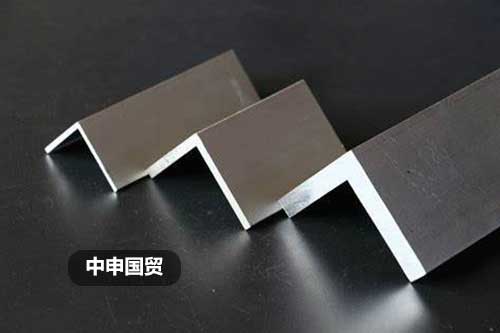
A comprehensive guide to aluminum export certifications (CE,AAMA,BIS,TISI) for European,US,Indian and Thai markets.Ensure compliance and market access.Learn more.
I.CE Certification for Exporting to European Countries:
CE certification is a safety certification required for products to enter the EU market and is regarded as a passport for manufacturers to open and enter the European market.The certification process includes:
(1) The applicant makes an oral or written preliminary application to the laboratory.
(2) The applicant fills out the CE - marking application form and sends the application form,product instruction manual,technical documents,and samples to the laboratory together.
(3) The laboratory reviews the technical documents.The review content includes whether the documents are complete and whether they are written in the official languages of the European Community (English,German,or French).If there are any discrepancies,the laboratory will notify the applicant to make improvements.
(4) The laboratory conducts product testing.If the test is unqualified,the laboratory will promptly notify the applicant and allow the applicant to improve the product.This process continues until the test is qualified.The applicant should change the technical information in the original application to reflect the actual situation after the change.
(5) The laboratory provides the applicant with a test report or technical documents,as well as a CE compliance certificate and CE mark.
(6) The applicant signs the CE self - declaration of conformity and attaches the CE mark to the product.
It should be noted that CE certification is not a certification carried out by an official EU institution,but a certification carried out by a third - party institution recognized by the EU.Therefore,when choosing a certification institution,an institution recognized by the EU should be selected.At the same time,the validity period of CE certification is five years,and re - certification is required after five years.
II.AAMA Certification for Exporting to the United States:
AAMA certification is the certification of the American Architectural Manufacturers Association.The certification process includes:
(1) The applicant needs to submit an application to AAMA,stating product information and requirements.
(2) The AAMA evaluation team will review the application materials to determine whether they meet the AAMA certification requirements.
(3) If the application passes the evaluation,product testing is required.The testing includes aspects such as appearance,strength,airtightness,and water tightness.
(4) After the testing is completed,the AAMA certification institution will issue a report,which will include a detailed description of whether the product meets the AAMA certification requirements.
(5) If the product meets the AAMA certification requirements after testing,the certification institution will issue an AAMA certification certificate.
(6) The validity period of the certification certificate is 3 years,but AAMA will continuously monitor the certified products to ensure that they continuously meet the certification requirements.
The above are the main steps of the AAMA certification process.It is worth noting that the applicant needs to pay the corresponding certification fees and ensure that their products already meet the AAMA certification standard requirements at the time of application.If the product fails to pass the AAMA certification,the certification institution will provide corresponding suggestions and guidance so that the applicant can further improve the product and apply for certification again.
III.BIS Certification for Exporting to India:
BIS certification is the certification of the Bureau of Indian Standards,which is the competent authority for standardization and certification in India.The certification process includes:
(1) Foreign manufacturers need to use special application materials and prepare relevant documents to apply for BIS certification at the New Delhi headquarters.The applicant needs to pay the corresponding processing fees.
(2) BIS will review the application documents and materials submitted by the applicant.If the procedures are complete,the application will be recorded.
(3) BIS will appoint no more than 2 staff members to conduct inspections at the factory.The applicant must bear the travel visa fees and relevant inspection fees required for the official team to inspect the factory.
(4) If the first inspection and test results are qualified,and the applicant agrees to the certification,implements the inspection and test plan recognized by BIS,and pays the BIS identification mark fee,a certificate can be issued to the applicant.The certificate is valid for one year.After certification,the holder needs to pay the certification fee and the annual certificate fee every year.
(5) BIS conducts continuous inspections and tests on samples from factories and the market through daily supervision to monitor the certified products of the certificate holders.In the case of regular inspections,if the samples collected from the factory or the market meet the requirements after factory inspection and independent testing,the certificate can be renewed.
IV.TISI Certification for Exporting to Thailand:
TISI certification is the certification of the Thai Industrial Standards Institute.The certification process includes:
(1) Product registration: First,the product needs to be sent to the Thai TISI institution through formal channels for product registration,and wait for the official result on whether the product needs to undergo TISI certification.
(2) Laboratory testing: If certification is required,the product needs to be sent to a TISI - recognized laboratory for testing to ensure that the product meets Thai standards and requirements.
(3) Quality control document review: Organize the factorys quality control documents and submit them to the TISI department for review.These documents should include the factorys production process,quality control procedures,and testing methods,etc.
(4) Factory inspection: After the factorys quality control documents pass the review,a factory audit report document will be issued,and TISI will send personnel to the factory for inspection to ensure that the production process and the factory meet TISIs standards and requirements.
(5) Review and certification: After the factory inspection passes,follow up on the test progress and the factory audit report,and submit the report results to the TISI official for review.If the review passes,an official TISI certificate will be issued.
When exporting aluminum and its products to different countries,in addition to meeting the local certification requirements,factors such as local laws,regulations,culture,and customs,as well as issues such as product packaging and transportation also need to be considered.
Note: After December 1,2024,Aluminum productsRelated products are included in the list of cancellations.For details,please see:
Was this helpful? Give us a like!
Contact our experts for compliance audits, precise quotes, and one-stop customs support.
Recent Comments (0) 0
Leave a Reply