
FDA Import Alerts: A Guide for Food Manufacturers
or complex compliance issues.
clearance and fund security.
To ensure food safety and compliance,the U.S.Food and Drug Administration (FDA) has implemented a stringent regulatory system for imported food.This article provides a detailed explanation of FDAs Import Alert system and how businesses should respond to these regulations.
Import Refusals
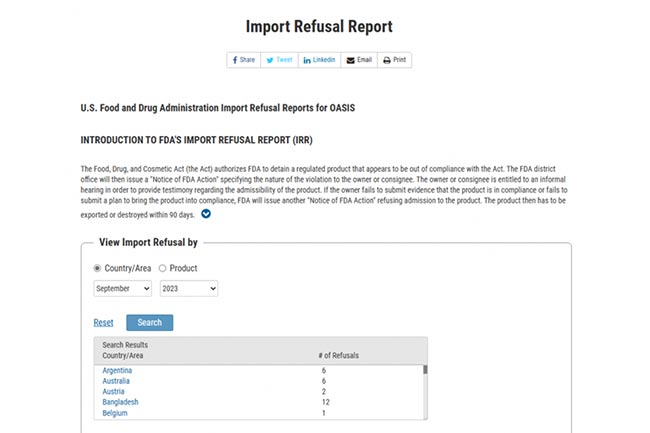
When imported food fails to meet U.S.regulatory requirements,the FDA will refuse its entry.The rejected food must be re-exported or destroyed within 90 days of the FDAs refusal notice,under the supervision of both FDA and Customs and Border Protection (CBP).Failure to comply may result in forfeiture of bond payments.
FDAs refused food imports can be queried on the official website:
Import alerts
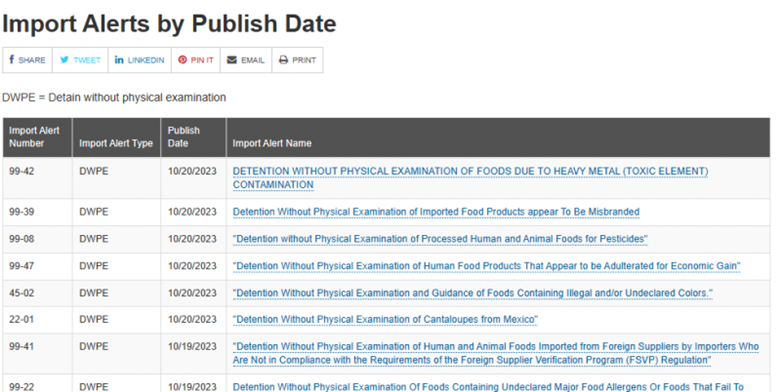
To enhance inspection efficiency and ensure food safety,FDA has implemented preventive measures called Detention Without Physical Examination (DWPE) for certain imported foods with potential risks.These alerts may target specific countries,manufacturers,products,or even carriers.
FDA manages import alerts through Red List,Green List,and Yellow List classifications.Unlike refused imports,companies listed on the Import Alert can submit applications to FDA for removal or modification.
For example,for certain cheeses from France,the FDA has implemented Import Alert 12 - 03,which means these cheeses will be automatically detained.However,compliant enterprises can be included in the green list and thus continue to export to the United States.
FDAs Import Alert reporting section publishes daily notifications of countries and companies subject to DWPE.
List Types and Descriptions
(a) Red List: Refers to companies,products,or countries subject to DWPE due to non-compliance.
(b) Green List: Companies,products,or countries subject to DWPE but deemed compliant by FDA.
(c) Yellow List: Companies,products,or countries under intensified surveillance.
Measures Taken by Enterprises
When food imports are detained under DWPE,companies must provide third-party test reports to FDA to demonstrate compliance.Additionally,Red List companies may submit applications requesting removal from the Red List or transfer to the Green List.This process involves multiple steps,including document submission,evidence provision,and communication with FDA.
Response Strategies
For companies exporting to the U.S.ensuring product compliance is paramount.They should also closely monitor FDA Import Alerts and take appropriate measures when necessary to avoid financial losses.
Was this helpful? Give us a like!
Contact our experts for compliance audits, precise quotes, and one-stop customs support.
Recent Comments (0) 0
Leave a Reply