
Auto Parts Import: 5 Key Principles for Agents
or complex compliance issues.
clearance and fund security.
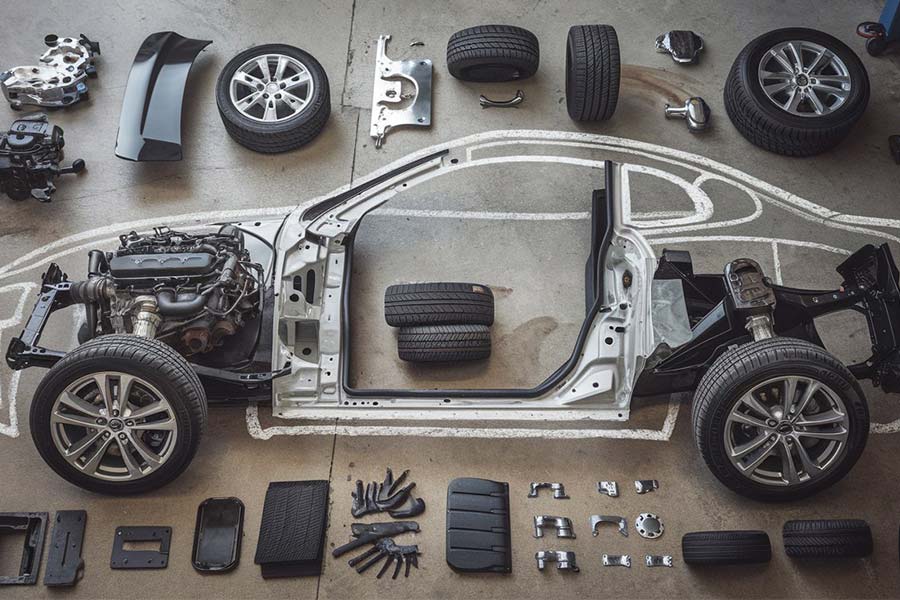
With the rapid growth of global automotive aftermarket demand,more enterprises are importing cost-effective.However,the complexity of auto parts categories (such as OEM parts,aftermarket parts,and modified parts) and stringent import policies (involving,environmental standards,intellectual property,etc.),coupled with the potential risks in the logistics and customs clearance stages,if an enterprise lacks professional agency support,it is very easy to face cargo detention,high fines,and even legal disputes.As a 20-year experienced importservice experts with 20 years of experience,this article systematically outlines five core principles for selecting auto partsto help you avoid pitfalls and achieve efficient customs clearance.
Qualification Review: Legal compliance is the prerequisite for cooperation
Agents with incomplete qualifications may cause your goods to be held up at customs,
Automotive parts import involves multiple mandatory certifications (such as EU E-Mark certification,US DOT certification,China CCC certification).The agency company must possess the following basic qualifications:
1.Enterprises need to have legal import and export qualifications,including: : Verify the agency companys Customs Declaration Unit Registration Certificate and Foreign Trade Operator Registration Form,Industry-specific qualifications
2.Does the company have experience in importing automotive parts?Is it familiar with destination country policies (such as GCC certification for Middle Eastern countries or type approval for Southeast Asian countries)?: Credit endorsement
3.Priority should be given to certified member companies of China Customs Brokers Association (CCBA) or International Federation of Freight Forwarders Associations (FIATA).Such companies are usually subject to industry supervision and provide more standardized services.: Be wary of promises like tax-inclusive import or gray customs clearance,as such operations may lead to cargo detention or even trigger corporate credit downgrades.
Risk Warning: Beware of promises such as tax-inclusive import or gray customs clearance,as such practices may lead to cargo detention or even trigger corporate credit downgrades.
II.Service Capability: End-to-End Supply Chain Assurance from Procurement to Delivery
1.Overseas Warehousing and Inspection Services:
Premium agents should maintain self-operated or partnered warehouses in key sourcing countries (e.g.Germany,Japan,USA),supporting centralized parts procurement,quality inspection,and label rectification (e.g.relabeling components missing CE marks) to avoid post-arrival returns due to quality issues.
2.Moisture - proof requirements:
Automotive parts are predominantly precision components (e.g.ECUs,sensors) or large items (e.g.engines,transmissions),requiring transportation methods tailored to part characteristics:
- High-valueparts:Priority+Climate-controlledtransportwithdoor-to-doorinsurancecoverage;
- Bulkcomponents:SelectFCLshipments(tominimizecargodamage)+freedemurrageservicesatdestinationports(toreduceportstoragefees).
3.Customs Clearance and Tax Optimization Capabilities:
- Proficientutilizationoffreetradezonepolicies(e.g.parallelimportautopartscanleveragebondedwarehousingdistribution),(e.g.China-ASEANFreeTradeAreapreferentialtariffrates)Reducetariffcosts
- AssistenterprisesinproperHSCodedeclarationtoavoidpenaltiesduetoclassificationerrors(e.g.:modifiedpartsvsOEMpartsmayhave15%tariffdifference).
Risk Control: From Contract Details to Contingency Plans
Comprehensive contract terms are the core of dispute prevention,
1.Clearly define responsibility boundaries:
- Specifycustomsclearancetimelines,taxliabilityallocation(e.g.DDPterms),andforcemajeuresolutions(e.g.alternativetransportarrangementsduringportlockdowns)inagencyagreements
- Requireagentstoprovidedocumentpre-reviewservices(advanceverificationofinvoices,packinglists,certificationdocuments)toavoidreturnsduetodocumentdiscrepancies.
2.intellectual property protection.:
Industry Expertise: Specialized Operators Are More Reliable
General-purpose agents may not understand automotive parts specifics,
- Priorityselectioncriteriaforagents:
Handled at least 100 batches of auto parts import cases;
Familiar withspecial requirements for auto parts imports (such as lithium battery UN38.3 certification);
Possess cooperation endorsements from OEMs or multinational auto parts chain brands (e.g.Bosch,Schaeffler).
Service Response: Efficient communication determines problem-solving speed
24-hour response mechanism is a rigid requirement for handling emergencies,
- Evaluatetheserviceteamconfigurationofagencycompanies:
- AreGerman,Japaneseandotherminorlanguagecustomsdeclarersequipped(tohandledocumentsfromnon-Englishspeakingcountries)?
- Doyouprovidededicatedaccountmanagersandamulti-to-oneserviceteamforcustomsclearance,logistics,andtaxmatters?
- Testing response efficiency: During the inquiry phase,observe whether the agency can provide a solution within 4 hours and accurately answer technical questions (e.g.Do brake pads imported to Indonesia require SNI certification?).
Conclusion: The ultimate logic in choosing an agency—let professionals do professional work.
Every step of auto parts import carries hidden risks.An excellent agency should simultaneously play three roles: policy advisor,risk controller,and cost optimization expert.It is recommended that enterprises use a three-step screening method—qualification verification + case review + solution comparison—to prioritize agencies with deep expertise in auto parts,complete service chains,and transparent pricing,thereby focusing more energy on market expansion and customer service.
Was this helpful? Give us a like!
Contact our experts for compliance audits, precise quotes, and one-stop customs support.
Recent Comments (0) 0
Leave a Reply