Home»Automotive Parts» Exported Used Car Returned? "Transfer for Export" Trap and Classification of Whole Vehicle Export
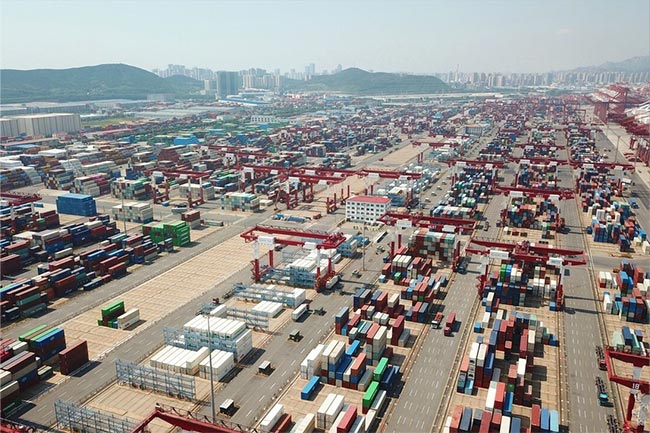
Last month, my friend Lao Zhang, who works in the second-hand car export business in Taizhou, sent me a WeChat message late at night. His voice was full of anxiety: "The cars have arrived at Ningbo Port, but the customs broker said that the 'awaiting export' status of these cars can't be found in the customs system. Now the containers are stuck, and the shipping schedule will definitely be missed. The demurrage fee will cost tens of thousands of yuan!"
The problem that Lao Zhang encountered is the pitfall that novice enterprises are most likely to fall into after the liberalization of second-hand car exports in 2024-2025.They thought that having a sales contract and a license would be enough to declare customs, but they overlooked the "time lag" between the data of the vehicle management office and that of the customs. In fact, the export of second-hand cars is not simply a matter of "selling cars", but a precise relay race involving data interaction among three parties: the public security traffic management department, the Ministry of Commerce, and the customs.
Today, we will start with this painful lesson and deeply disassemble the entire process of compliance for second-hand car exports, especially the customs classification details that have caused headaches for countless people.
Why is it more difficult to report second-hand cars for export than new cars?
The core challenge of second-hand car exports lies in the standardized declaration of "non-standard products". New cars come with a Consistency of Origin Certificate (COC) issued by the manufacturer, with uniform parameters; while second-hand cars involve complex variables such as vehicle condition, modifications, and energy types. Customs inspections often focus on the following aspects:Is the vehicle identification number (VIN) tampered with? Has the battery status been accurately reported? And is the classification accurate?
The following table summarizes the common conflicts between corporate cognition and customs supervision in the current second-hand car export market:
Risk dimension
Common Misconceptions in Business
Customs/regulatory requirements
Our Preventive Measures
Vehicle status
Since it's for export, we can just tow the car directly to the port
It is necessary to first go to the traffic administration office to handle the registration of "transfer for export", and only after the data is connected online can the customs declaration be made
Unable to declare the goods, the cargo is stranded in the port
Classification Logic
Hybrid cars are also?New Energy?All of them are registered as electric vehicles.
The tax codes for plug-in hybrid electric vehicles (PHEVs) and pure electric vehicles (BEVs) are completely different, and the engine displacement must be distinguished between the two.
Classification error, suspected false declaration, and impact on tax refund
Battery declaration
It's normal for the battery of a second-hand car to degrade over time. There's no need to explain it in too much detail
It is necessary to truthfully declare the battery capacity and type, and it is strictly prohibited to export batteries that pose a safety hazard
Suspected of exporting hazardous waste, the suspect was handed over to the anti-smuggling authorities
License
A single permit can be issued in batches
Implement strict management with the principle of "one certificate per car" or "one batch per certificate", and the verification and clearance process is extremely rigorous
The license has expired, and I can't go through customs
Practical Guidelines for Customs Classification (HS Code) of Second-hand Cars for Export
As new energy second-hand cars have become the main force of exports, classification has become particularly crucial. The core basis for customs classification isPower sourceAndDisplacement.
1. Pure electric vehicles (BEVs)
HS Code:8703.8000.10 (9 seats and below)
Categorization Reason: This tax code specifically covers "other vehicles equipped only with a drive electric motor".
Declaration Attention: It is necessary to indicate "pure electric" in the declaration elements. Even for second-hand cars, if the battery has been replaced, it must be stated in the remarks column.
2. Plug-in hybrid electric vehicle (PHEV)
HS Code:8703.6000.xx (Subdivided according to engine displacement)
Categorization Reason: This type of vehicle is equipped with both a drive motor and a spark-ignited internal combustion engine for fuel supplementation, and it can be charged via an external power source.
Pitfall Avoidance Points: Many companies mistakenly classify "range-extended" electric vehicles (such as the Ideal ONE) as pure electric vehicles. In fact, as long as there is an internal combustion engine involved (even if it only generates electricity and does not drive), it is usually classified as a hybrid vehicle in customs classification logic, and the engine displacement needs to be carefully checked.
Categorization Reason: Divided according to the cylinder capacity.
Declaration Attention: For the export of used fuel vehicles, the customs will focus on checking whether the three-way catalytic converter has been removed (which involves environmental protection issues).
4. Key declaration elements (required)
When declaring through the "Single Window" system, in addition to the HS code, the following factors determine whether the goods will be subject to controlled inspection:
GT_STATE (Goods Attribute): It is necessary to check or fill in "used" or "second-hand".
VIN code: It must be completely consistent with the vehicle's identification plate and the cancellation certificate of the driving license.
Brand/Model/Displacement: It must match the information on the Export License exactly, without any discrepancies whatsoever.
The entire process of exporting second-hand cars
To ensure smoothness from vehicle collection to departure, it is recommended to follow the following "Five-Step Method":
Step 1: Vehicle source screening and inspection
Action: After purchasing the vehicle, it is necessary to entrust a third-party inspection agency to issue a "Second-hand Car Inspection Report".
Key point: Ensure that the vehicle has no major accidents, no fire damage, and no water damage. For new energy vehicles, this must be included.Battery Health ReportThis is a prerequisite for applying for an export license.
Step 2: Transfer for Export Registration— The most error-prone step
Action: Bring the trade contract and business license to the motor vehicle registration service station to handle the "transfer registration".
Key points: At this time, we do not issue new license plates and certificates, but instead issue the "Motor Vehicle Export Pending Certificate".
Pitfall Avoidance: Be sure to confirm that the vehicle registration office will update the vehicle's status in the system to "awaiting export". If the customs system cannot read this status, the customs declaration form will not be able to be submitted at all.
Step 3: Apply for an export license
Action: Log in to the "Unified Platform" of the Ministry of Commerce, and upload the contract, inspection report, and application for an export license certificate.
Time Limit: Usually, a "one car, one certificate" system is implemented, and the validity period is generally 6 months.
Step 4: Customs declaration and port consolidation
Action: The goods arrive at the port supervision area, and the customs broker initiates the declaration process.
Document List:
Business Invoice
Packing List (indicating the VIN number)
Export License (Electronic Online Verification)
Motor vehicle export waiting certificate
Trade contract
Step 5: Cancel the registration
Action: Within 2 months after the vehicle leaves the country, the owner shall, upon presenting the Export Goods Declaration Form issued by the customs, go to the vehicle administration office to handle the cancellation of registration.
Risk: If it is not deregistered, the enterprise's subsequent export business qualifications may be suspended.
Risk Alert from an Expert's Perspective
As an industry consultant, I have two pieces of advice that "non-insiders in the industry might not know":
1. Future risks of "battery traceability" The European Union and some Central Asian countries are tightening environmental protection requirements for power batteries. When exporting second-hand new energy vehicles, it is recommended to establish a "one vehicle, one file" battery archive (including battery codes and residual value assessments). Although customs currently only check for hazardous chemical properties, it is highly likely that they will require proof of the battery recycling process in the future.
2. Beware of the suspicion of "tax refund fraud" At present, the export of second-hand cars is subject to the VAT tax refund policy (usually calculated based on the purchase invoice). If your purchase price is significantly higher than the domestic market price (buying high and selling low), or the invoice chain is incomplete, it is very likely to trigger the attention of the tax bureau.Function callIt is essential to maintain complete transaction records and the basis for price assessments.
Quick Action List
If your car is about to be loaded into a container, please immediately check the following three points:
VIN Code Physical Vehicle Verification: Send someone to the warehouse to photocopy the VIN (vehicle identification number) and compare it with the numbers on the customs declaration and the license one by one. If there's even a single digit mismatch, the cost of returning the goods for re-declaration could run into tens of thousands of yuan.
Clean up the items in the car: It is strictly prohibited to smuggle spare parts, lubricating oil, and personal belongings in the trunk of second-hand cars. This is considered "smuggling by concealment", which will result in the entire container of goods being detained.
Power Level Control: When loading new energy vehicles onto ships, it is recommended that the battery level be maintained between 30% and 50%. A battery level that is too high (>70%) will be rejected by the shipping company, while a battery level that is too low may result in the vehicle being unable to start after arriving at the port.






 簡體中文
簡體中文  English
  Русский
  日本語
日本語  Espa?ol de México
  ???
???